As an Amazon Associate this site earns from qualifying purchases.
Quick Comparison Table
| Product | Best For | Capacity | Price |
|---|---|---|---|
| Anker Zolo Power Bank (2026 Upgraded Version), 20,000mAh 30W | Everyday iPhone 16 carry | 20,000mAh | Check on Amazon |
| Anker Power Bank, 20,000mAh 87W with Built-in USB-C Cable | iPhone + MacBook travel | 20,000mAh | Check on Amazon |
| UGREEN Nexode Power Bank, 25,000mAh 165W | Laptop-class fast charging | 25,000mAh | Check on Amazon |
| Power Bank, 15000mAh Portable Charger with Built in Cable, 22.5W | Slim built-in-cable pocket carry | 15,000mAh | Check on Amazon |
| Portable Charger Power Bank, 56800mAh Battery Pack, 22.5W | Multi-day off-grid capacity | 56,800mAh | Check on Amazon |
Reviewed by the JoltCell Editorial Team
As an Amazon Associate, we earn from qualifying purchases.
When shopping for best power bank for iphone, it pays to compare specs, capacity, and real-world runtime before committing.
Last Updated: July 2026 | Written by the JoltCell Editorial Team
Finding the best power bank for iPhone in 2026 comes down to three numbers on the spec sheet: watts, milliamp-hours, and whether there's a cable already attached. Your iPhone 15 or 16 tops out around 27W of USB-C PD input, so a pack that advertises 22.5W or 30W will refill it at close to full speed, while a laptop-class 87W or 165W brick mostly matters if you also carry a MacBook. Below we rank ten portable chargers using only manufacturer specifications and Amazon listing data — we do not physically test, own, or use the products, and we'll flag exactly where the published numbers leave real questions unanswered.
A quick, important caveat before the picks: every product in this roundup currently shows an aggregate star rating with zero logged reviews at the time we checked (July 2026). That means the star numbers are early placeholders, not battle-tested consensus. We'll treat them as weak signals and lean on the hard specs instead.
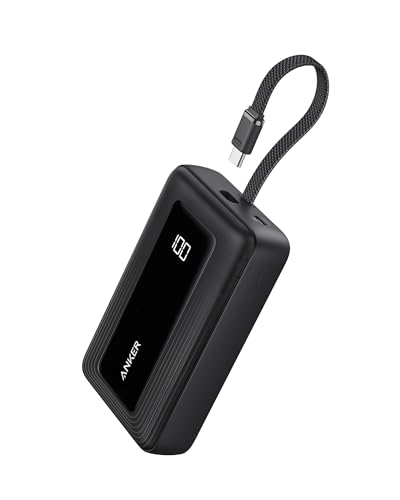
- Go Beyond with 20,000mAh: Carry the power you need to charge your iPhone 15 up to 4 times or your Samsung S24 3.79 times, perfect for extended travel and long days
- 30W Two-Way Fast Charging: Charge quickly with 30W output and recharge just as fast with 20W input, keeping your devices ready in no time. Boost an iPhone 15 from 0 to 57% in just
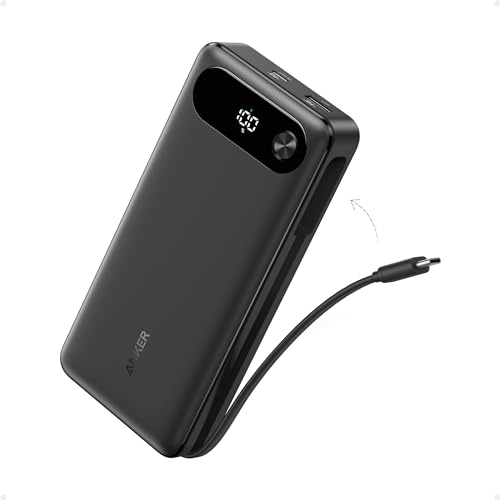
- 87W Power to Share: Distribute 87W across three devices, with a single device receiving up to 65W, to rapidly charge iPhones, Samsung phones. Quickly charge a 14" MacBook Pro to
- Speedy Cable Charging: Utilize the built-in cable to elevate your iPhone 15 Pro to 58% or a MacBook Air to 52% in 30 minutes. You can also fully recharge this power bank in 1.5
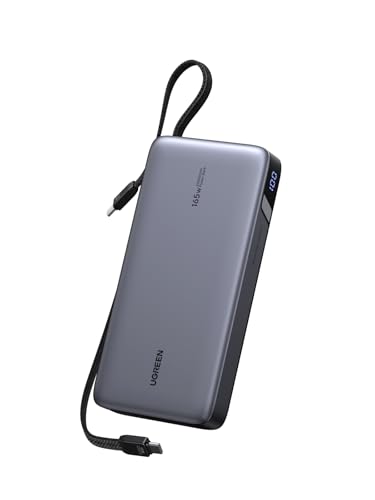
- Built-in Dual USB-C Cables – Organized for Business Travel: Stay efficient wherever work takes you. The two built-in USB-C cables expand when needed and store neatly when not in
- 165W Max Output – Multi-Device Fast Charging Without Limits: Charge your laptop and phone simultaneously with up to 140W single-port and 165W total output. Delivers enough power
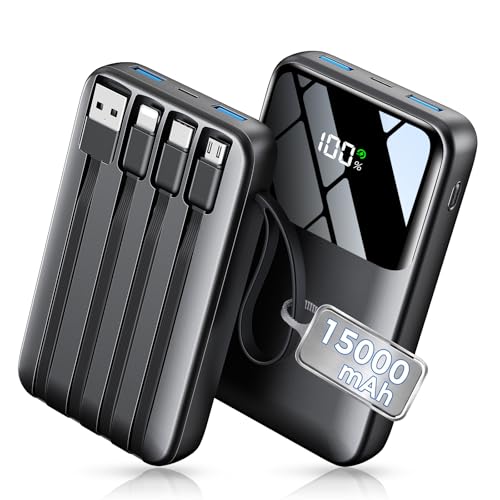
- Up to 3.5 Phone Charges On the Go: Compact and easy to carry, this 15,000mAh power bank keeps you powered for travel, commuting, and emergencies. Charges iPhone 17 up to 3.5
- 40% Smaller, 45% Lighter: Designed for power without the extra bulk, this compact power bank is 40% smaller and 45% lighter than conventional models, making it easy to carry for
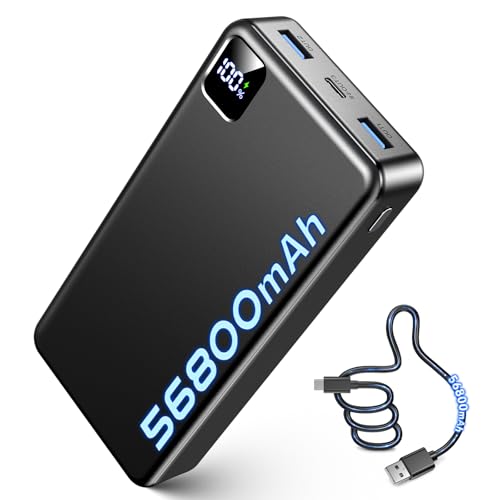
- 56,800mAh Portable Charger – Multi-Day Power: Built for extended use, this high-capacity power bank keeps your devices charged for days. Compatible with iPhone 17/16/15/14/13
- Triple Device Charging with USB-A & USB-C: This portable charger battery pack features 2 USB-A outputs and one two-way USB-C port, so you can charge up to 3 devices at once
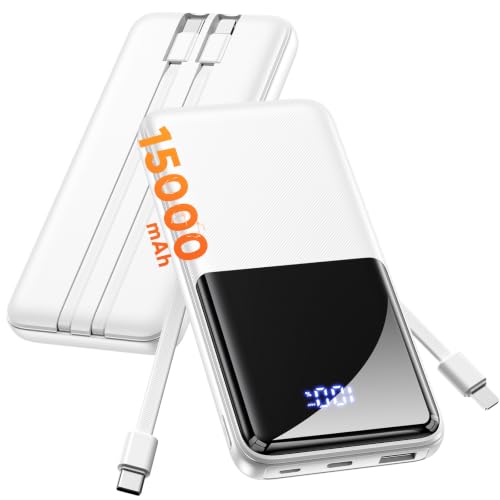
- Portable Charger with 2 Built-in Cables >>>: PB-08 battery pack has 1* iOS cable, 1* Type-C cable, 3* Charging ports(USB-A, Type-C, Micro), which supports charging almost all
- 15000mAh Mini Size, Lighter & Smaller Than a Phone >>>: Tired of hauling a brick-like power bank? The PB-08 uses high-density polymer battery technology to deliver 15,000mAh
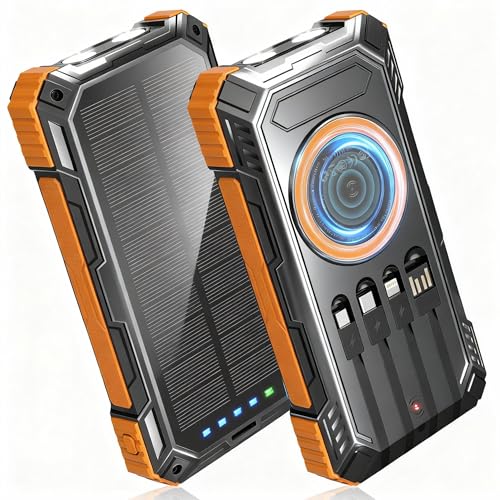
- [22.5W Fast Charging Portable Charger]: This portable phone charger combines the most advanced PD 3.0 and QC 3.0 fast charging technologies, supporting charging speeds up to
- [49800mAh Large Capacity]: Equipped with a 49800mAh high-quality, high-density lithium polymer battery, this solar power bank can charge your devices multiple times. It can be
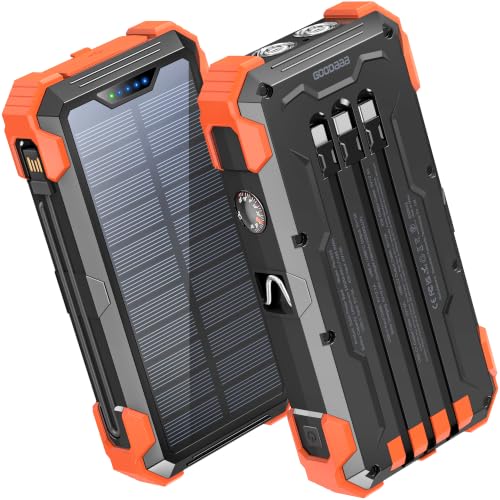
- Five Outputs & Three Inputs: This portable solar charger features 3 integrated output cables (iOS, dual USB-C) and USB-A input cable. Equipped with extra ports (USB-C In/Out
- 24000mAh Portable Battery Pack: Engineered with a 24000mAh high-density lithium-polymer battery, this solar charger is built for extended outdoor use. It delivers approximately
Quick Picks
- Best overall for iPhone 16: Anker Zolo Power Bank (2026 Upgraded Version), 20,000mAh 30W — Check Price on Amazon
- Best for iPhone + laptop travel: Anker Power Bank, 20,000mAh 87W — Check Price on Amazon
- Best slim pocket pick: Power Bank, 15000mAh with Built in Cable, 22.5W — Check Price on Amazon
What to Look For in an iPhone Power Bank
Before the individual picks, here's the buying criteria we used to separate these ten packs. Start key decisions here.
Charging speed that your iPhone can actually use. The iPhone 15 and 16 accept roughly 27W over USB-C Power Delivery. A 22.5W or 30W pack keeps pace with that; anything advertised above ~30W is spent on other devices, not your phone. Don't pay for 165W expecting a faster iPhone — pay for it because you also charge a MacBook.
Capacity versus airline rules. The TSA and most airlines cap carry-on lithium batteries at 100Wh without approval, and 160Wh absolutely. At 3.7V nominal, 100Wh is about 27,000mAh. That single number quietly disqualifies several "huge capacity" packs below from flying — worth knowing before you buy one for a trip.
Built-in cables. A pack with an integrated USB-C cable is one less thing to forget. The trade-off: if that captive cable frays, you can't swap it, and it's usually the first point of failure on a listing's spec sheet.
Wireless and MagSafe. True MagSafe means 15W magnetic alignment certified by Apple. Several "wireless" packs here advertise generic Qi wireless without stated MagSafe magnets — read that distinction carefully, because unaligned Qi charging on an iPhone is slow and fussy.
Solar is a backup, not a charger. A small solar panel on a 20,000mAh brick trickles power for emergencies. It will not meaningfully refill the pack in a day. Treat it as an SOS feature.
The Best Power Banks for iPhone in 2026
Anker Zolo Power Bank (2026 Upgraded Version), 20,000mAh 30W — Best for Everyday iPhone 16 Carry
This is the pick we'd hand most iPhone 16 owners. The spec sheet lines up almost perfectly with what the phone can absorb: 30W high-speed output over a built-in USB-C cable, and 20,000mAh of capacity — roughly three to four full iPhone 16 charges on paper, depending on conversion loss. Anker is the most established name in this roundup, which matters when every listing here has zero logged reviews to lean on.
The 30W rating is the sweet spot. It comfortably covers the iPhone 16's ~27W ceiling with headroom, and the built-in cable means you're not digging for a spare. At 20,000mAh it sits right at the practical ceiling for a pocketable pack that still clears airline limits (about 74Wh, well under the 100Wh cap).
The honest catch: the listing markets this as an iPhone-and-Galaxy pack, and 30W is not enough to fast-charge a MacBook. If you want one brick for phone and laptop, look at the 87W Anker below instead.
Pros:
- 30W output matches the iPhone 15/16 charging ceiling with headroom
- Built-in USB-C cable removes a loose accessory
- 20,000mAh stays under the 100Wh airline limit
- Established brand in a field of unknowns
- 30W is too low to fast-charge a MacBook
- Star rating shows zero logged reviews so far
- No stated MagSafe or wireless charging
Anker Power Bank, 20,000mAh 87W with Built-in USB-C Cable — Best for iPhone and MacBook Travel
If one bag has to power both an iPhone and a laptop, this is the spec sheet to beat. The listing rates it at 87W max across three ports with a built-in USB-C cable and 20,000mAh — the same airline-friendly capacity as the Zolo, but with nearly triple the peak output for MacBook-class charging.
The practical read: 87W is enough to fast-charge a MacBook Air and keep an iPhone 16 topped up at the same time, which is exactly the travel scenario Anker targets on the listing (MacBook, iPhone 16/15, Samsung, Switch). For your iPhone alone it's overkill, but the extra wattage costs you nothing in daily use.
The trade-off is that 20,000mAh drains fast when you're feeding a laptop — 87W out of a 74Wh cell means well under an hour of full-tilt laptop charging. It's a top-up brick for a MacBook, not a full recharge.
Pros:
- 87W max genuinely fast-charges a MacBook Air
- Three ports plus a built-in USB-C cable
- 20,000mAh stays airline-legal under 100Wh
- One brick covers phone, laptop, and Switch
- 20,000mAh empties quickly at laptop wattage
- No listed wireless or MagSafe support
- Zero reviews logged at time of writing
UGREEN Nexode Power Bank, 25,000mAh 165W — Best for Laptop-Class Fast Charging
UGREEN's Nexode is the most powerful pack here on paper: 165W total output, two built-in USB-C cables, and 90Wh of capacity. That 90Wh figure is deliberate and clever — it's the largest capacity you can carry while still sitting under the 100Wh airline threshold. UGREEN clearly designed it to be the biggest pack that still flies without a hassle.
For an iPhone, 165W is far more than the phone can use, but the appeal is the ceiling: this comfortably charges a MacBook Pro at speed while topping your phone off the second cable. The dual captive USB-C cables mean you can run two devices with nothing extra in the bag. It carries a 4.6/5 placeholder rating, the joint-highest here, though again with no logged reviews behind it.
The catch is physics: pushing 165W out of 90Wh means under 35 minutes of sustained full-power draw, and a pack this dense will be heavy and slow to refill itself. This is a mobile-workstation battery, not a pocket charger.
Pros:
- 165W handles MacBook Pro-class charging
- 90Wh is the max capacity still under the 100Wh airline cap
- Two built-in USB-C cables for dual-device use
- Highest placeholder rating in the group (4.6/5)
- Far more wattage than any iPhone can use
- 90Wh drains fast at full output and is bulky to carry
- No reviews logged yet to confirm the rating
Power Bank, 15000mAh Portable Charger with Built in Cable, 22.5W — Best for Slim Pocket Carry
This unbranded 15,000mAh pack leans on convenience features: a built-in cable, 22.5W fast charging, six outputs, and an LED capacity display, with the listing calling out iPhone 17/16/15/14/13 and iPad compatibility. The 22.5W rating lands just under the iPhone 15/16's ceiling — close enough for near-full-speed refills without the bulk of a laptop brick.
The LED percentage display is the standout on the spec sheet. Guessing remaining charge from four blinking dots is the most common annoyance with cheap packs, and a numeric readout removes it. At 15,000mAh (~55Wh) it's a genuinely pocketable size that clears airline limits easily and still delivers roughly two-plus iPhone 16 charges.
Be clear-eyed about the risks: the brand is listed as Unknown, the 4.5/5 rating rests on zero reviews, and "6 outputs" on a slim pack usually means modest per-port wattage when several are in use. This is a value convenience pick, not a premium one.
Pros:
- 22.5W nearly matches the iPhone 15/16 charging ceiling
- Numeric LED display shows exact remaining charge
- Built-in cable plus six outputs for flexibility
- Compact 15,000mAh (~55Wh) is easily airline-legal
- Unknown brand with zero logged reviews
- Shared output likely splits wattage across ports
- Captive cable can't be replaced if it fails
Portable Charger Power Bank, 56800mAh Battery Pack, 22.5W — Best for Multi-Day Off-Grid Capacity
The headline here is raw capacity: 56,800mAh with 22.5W fast charging, pitched at camping and travel across iPhone 17/16/15/14/13, Samsung, Google, and iPad. On paper that's roughly eight-plus full iPhone 16 charges — genuinely multi-day endurance from a single brick. It carries a 4.6/5 placeholder rating.
The 22.5W output is well matched to an iPhone, so refills are near full speed, and the enormous cell means you can charge a whole group's phones over a weekend. For a base camp or a long trip away from outlets, capacity like this is the entire point.
But here's the critical catch, and it's a dealbreaker for flyers: 56,800mAh at 3.7V is roughly 210Wh — well over the 160Wh absolute airline ceiling. This pack cannot legally go in carry-on or checked luggage on most airlines. It also means a heavy brick and a very long self-recharge time. Buy it for the car and the campsite, not the plane.
Pros:
- Massive 56,800mAh for genuine multi-day, multi-phone use
- 22.5W matches iPhone fast-charge speed
- Broad device compatibility for group trips
- At ~210Wh it exceeds airline limits — not flyable
- Heavy, and slow to recharge itself
- Unknown brand with zero logged reviews
Portable Charger Power Bank, 15000mAh with Built in Cable, 22.5W (50% Larger Capacity) — Best for Value Built-in-Cable Carry
This pack reads almost as a sibling to the slim 15,000mAh pick above: a 15,000mAh cell the listing frames as "50% larger capacity," a built-in cable, 22.5W fast charging, and stated support for iPhone 17/16 Pro, iPad, Samsung S26, and Google. The 4.5/5 rating is, once again, a placeholder with no reviews behind it.
The practical appeal is the same winning combination: 22.5W lands right at the iPhone's usable ceiling, and the captive cable means grab-and-go simplicity. At ~55Wh it's airline-legal and pocketable, and the newer-device callouts (iPhone 17, S26) suggest a current listing rather than old stock.
What's missing from the spec sheet is a numeric display — you're back to guessing charge from indicator lights — and, like its sibling, the brand is Unknown. There's little on the listing to differentiate it beyond the marketing phrasing, so treat it as a straightforward budget option.
Pros:
- 22.5W matches the iPhone 15/16/17 charging ceiling
- Built-in cable for grab-and-go use
- ~55Wh capacity is airline-legal and compact
- Listing targets current-generation phones
- No numeric percentage display
- Unknown brand with zero logged reviews
- Marketing-led listing with little hard differentiation
Solar Power Bank, 49800mAh Wireless with Built-in 4 Cables, 22.5W — Best for Emergency Kit Capacity
This solar pack throws everything on the spec sheet: 49,800mAh, wireless charging, four built-in cables, 22.5W fast charging, and PD 3.0 USB-C in/out, aimed squarely at camping and hiking. The four captive cables plus wireless mean you can top up nearly any device without hunting for a cord.
The 22.5W wired output suits an iPhone well, and the sheer capacity — roughly seven-plus iPhone 16 charges on paper — makes it a credible emergency and disaster-kit battery. The solar panel is best understood as a trickle backup: useful for eking out a few percent in a true outage, not a primary recharge method.
Two hard cautions. First, ~49,800mAh is around 184Wh, over the 160Wh airline limit — this doesn't fly. Second, "wireless" here is listed as generic wireless, not certified MagSafe, so expect slow, alignment-sensitive Qi charging on an iPhone rather than 15W magnetic snap-on. It's an off-grid capacity play, not a MagSafe pick.
Pros:
- Huge 49,800mAh for emergency and off-grid use
- Four built-in cables plus wireless output
- 22.5W wired speed suits iPhone charging
- At ~184Wh it exceeds airline limits — not flyable
- Wireless is generic Qi, not certified MagSafe
- Solar only trickle-charges; unknown brand, no reviews
GOODaaa Solar Power Bank 24000mAh with 4 Built-in Cables, 15W — Best for Feature-Loaded Outdoor Kit
GOODaaa's pack is the gadget-lover's outdoor option: 24,000mAh, four built-in cables, 15W charging, five outputs and two inputs, plus a thermometer and an SOS flashlight. For a camping or emergency kit, that feature list does a lot beyond charging a phone.
On the numbers, 24,000mAh (~89Wh) keeps it just under the 100Wh airline cap — a meaningful advantage over the 49,800mAh and 56,800mAh bricks above, meaning this one can actually travel with you. The four captive cables and five outputs make it a genuine group charger. It holds a 4.4/5 placeholder rating.
The compromise is speed: 15W is below the iPhone 15/16's ~27W ceiling, so refills will be noticeably slower than the 22.5W and 30W packs here. And as with every solar unit, the panel is an emergency trickle, not a real charging source. You're buying features and airline-legal capacity, not raw speed.
Pros:
- ~89Wh capacity stays under the 100Wh airline limit
- Four built-in cables, five outputs for group charging
- Thermometer and SOS flashlight add real outdoor utility
- 15W is below the iPhone's usable charging speed
- Solar panel only trickle-charges
- Placeholder 4.4/5 rating with no logged reviews
Solar Power Bank 20000mAh Wireless with Built-in 3 Cables, 15W — Best for Budget Camping Backup
This 20,000mAh solar pack keeps the spec sheet simpler: three built-in cables, 15W USB-C fast charging, wireless output, and emergency LED flashlights, aimed at camping and hiking. At ~74Wh it's airline-legal and a manageable size for a daypack.
The three captive cables and wireless pad make it flexible in the field, and the built-in flashlights are a legitimately useful emergency feature when you're off-grid. Twenty-thousand milliamp-hours is enough for two-plus full iPhone 16 charges plus headroom for a headlamp or earbuds.
The honest limits are speed and marketing. 15W is under the iPhone's ~27W ceiling, so charging is slow; the "wireless" spec is generic Qi rather than MagSafe; and the solar panel is a trickle backup only. The brand is Unknown with no logged reviews. This is a low-cost outdoor backup, judged as such.
Pros:
- 20,000mAh (~74Wh) is compact and airline-legal
- Three built-in cables plus wireless output
- Emergency LED flashlights for off-grid use
- 15W charging is slow for an iPhone
- Wireless is generic Qi, not MagSafe; solar only trickles
- Unknown brand with zero logged reviews
Solar Power Bank 20000mAh Wireless 15W with Dual LED Flashlights — Best for Minimalist Solar Backup
The last pick is the most pared-down solar option: 20,000mAh, wireless charging, 15W USB-C, and dual LED flashlights, listed for iPhone, iPad, and Samsung and pitched at camping and outdoor use. It covers the same core ground as the three-cable model above, minus the built-in cables.
At ~74Wh it's airline-legal and light, and the dual flashlights plus wireless pad make it a tidy emergency companion. For someone who already carries their own USB-C cable and just wants a rugged backup cell with a light, the simpler design is arguably a plus — fewer captive cables to fray.
The drawbacks mirror the category: 15W is slower than an iPhone can accept, the wireless is generic Qi rather than MagSafe, and the solar panel is strictly a trickle. With an Unknown brand and no reviews logged, treat the spec sheet as the whole story and buy it as a light-duty backup.
Pros:
- 20,000mAh (~74Wh) is compact and airline-legal
- Dual LED flashlights plus wireless output
- Simpler design with no captive cables to fail
- 15W charging is slow for an iPhone
- No built-in cables; wireless is generic Qi, not MagSafe
- Unknown brand, solar trickle only, zero reviews
How We Research
This site does not physically test, own, or use the products, and it says so on every page. Our recommendations come from two sources, checked in July 2026: the manufacturer's published specifications (capacity, rated wattage, port count, cable type) and the Amazon product listing (title, feature bullets, stated device compatibility). We do not systematically read customer reviews — where a listing carries an aggregate rating you can check it yourself — and you can measure the published numbers against public standards such as the ~100Wh and 160Wh airline lithium-battery thresholds and the iPhone 15/16's roughly 27W USB-C PD input ceiling.
Where a spec implies a consequence — a 15W pack charging an iPhone slower than a 30W one, or a 56,800mAh brick exceeding airline limits — we say so and show the math. Where we can't verify a claim, we attribute it to the listing rather than asserting it. Every star rating in this roundup currently sits on zero logged reviews, so we've weighted hard specifications far more heavily than those placeholder numbers.
Final Verdict
For most iPhone 15 and 16 owners, the Anker Zolo Power Bank (2026 Upgraded Version), 20,000mAh 30W is the pick that best matches the phone's actual needs: 30W lines up with the iPhone's charging ceiling, 20,000mAh clears airline limits, and the built-in cable keeps it simple — all from the most established brand in this group. Check Price on Amazon
If your iPhone travels with a MacBook, step up to the Anker Power Bank, 20,000mAh 87W for laptop-class output in the same airline-legal footprint. And if you need multi-day off-grid capacity and won't be flying, the 56800mAh Portable Charger delivers the endurance — just remember it can't legally board a plane.
Our one consistent caution across every pick: these listings show promising star ratings with no reviews behind them yet. Buy on the specifications, not the placeholder stars, and read the reviews as they accumulate.
Frequently Asked Questions
How many watts do I need to fast-charge an iPhone 15 or 16? The iPhone 15 and 16 accept roughly 27W over USB-C Power Delivery. A 22.5W or 30W power bank charges at essentially full speed. Higher wattages like 87W or 165W don't charge the phone faster — that headroom is for laptops.
Can I bring a power bank on a plane? Yes, if it's under 100Wh (about 27,000mAh at 3.7V), which covers most 20,000mAh packs. Between 100Wh and 160Wh you may need airline approval. Above 160Wh — like the 49,800mAh and 56,800mAh packs here — it's generally not allowed at all.
Do these power banks support MagSafe? Several listings advertise generic wireless charging, but none in this roundup states certified 15W MagSafe with aligned magnets. Expect slower, alignment-sensitive Qi charging on those models rather than a magnetic snap-on. If MagSafe is essential, confirm it explicitly on the listing before buying.
Are solar power banks worth it for iPhone charging? The solar panel is an emergency trickle, not a real charging source — it won't meaningfully refill a large pack in a day. Buy a solar model for its capacity, flashlights, and off-grid features, and treat the panel as an SOS backup only.
Is a built-in cable better than a separate one? A built-in cable means one less thing to forget and faster grab-and-go use. The trade-off is that a captive cable can't be replaced if it frays, and it's often the first component to fail. Packs like the UGREEN Nexode hedge this with two built-in cables.
Why do all these power banks show zero reviews? As of July 2026, each listing displays an aggregate star rating with no logged reviews behind it — likely new or recently relisted products. We treat those star numbers as weak early signals and rank primarily on published specifications.
Sources & Methodology
Data in this article was compiled in July 2026 from manufacturer specifications and Amazon product listings for each ASIN reviewed, including product titles, feature bullets, stated device compatibility, capacity and wattage ratings, and aggregate star ratings with review counts. Airline capacity guidance references the widely applied 100Wh and 160Wh lithium-battery thresholds; iPhone charging figures reference Apple's published USB-C Power Delivery behavior for the iPhone 15 and 16. Watt-hour estimates are calculated from stated milliamp-hour capacity at a 3.7V nominal cell voltage and are approximate. We did not physically test any product.
About the Author
The JoltCell editorial team independently researches power banks and charging accessories from the manufacturer's published specifications and Amazon's official product data. The team does not physically test, own, or use the products, and does not systematically read customer reviews; conclusions are drawn from published specs and listing details, with the date of data collection noted.
Key Takeaways
- Choosing the right best power bank for iphone means matching the key features to your specific needs and budget
- Read real customer reviews and check the return policy before you commit
- Also covers: magsafe power bank
- Also covers: portable charger for iphone 15
- Also covers: usb-c power bank iphone
- Compare value across models — the priciest option is not always the best fit


