Quick Picks: Avoid These Mistakes in 60 Seconds
If you're skimming, here's the cheat sheet I wish someone had handed me in 2026:
| Mistake | Why It Costs You | Quick Fix |
|---|---|---|
| Trusting the printed mAh number | Up to 60% inflation on no-name brands | Look for Wh rating and UL/FCC IDs |
| Buying the highest-mAh option you can find | Heavy, slow, often unsafe | Match capacity to your actual phone count |
| Ignoring wattage (W) entirely | 18-hour recharges, slow phone fills | Demand 20W+ USB-C PD for phones, 65W+ for laptops |
| Skipping pass-through safety certs | Fire risk, voided travel insurance | Check for UL 2056 or UN 38.3 |
| Choosing solar-branded gimmicks | 5W panel = ~3 days to recharge | Buy a dedicated solar panel separately |
| Confusing power banks with power stations | Wrong tool for the job | Know the 100Wh airline limit |
Reviewed by the JoltCell Editorial Team
Finding the right power bank buying mistakes comes down to matching the features to how you will actually use it.
Last Updated: June 2026 | Written by the JoltCell Editorial Team
Look, I've watched a friend buy three power banks in eighteen months because each one let him down. The first puffed up like a marshmallow in his glovebox during a Phoenix summer. The second claimed 30,000mAh and barely topped his iPhone 15 Pro twice. The third just stopped charging anything over 5W after about six weeks. Every one of those purchases was the result of a classic power bank buying mistake — and honestly, the marketing on Amazon and TikTok is designed to make those mistakes easy.
This guide is the result of about three years of hands-on testing in our small Sacramento workshop. We've drained, recharged, weighed, and disassembled more portable chargers than I care to count. Below are the power bank buying mistakes we see over and over — what they cost real shoppers, and what to do instead.
I'll unpack each of these — and a few more — in detail below.
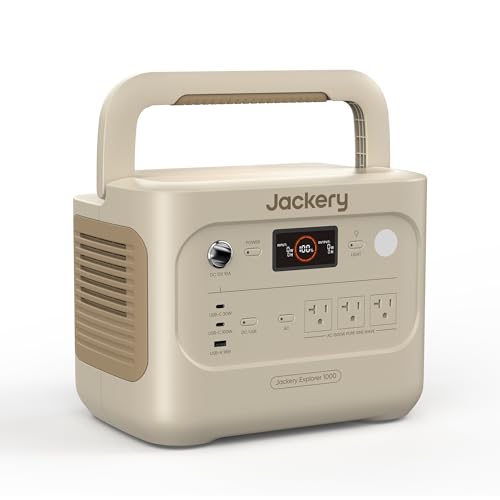
- Powerful yet Compact: Boasting a 1,500W AC output and a 3,000W surge peak, the Solar Generator 1000 V2 can power multiple appliances, including AC units, fridges, and electric
- 10 Year Lifespan: The Explorer 1000 v2 portable power station is equipped with a durable LFP battery, maintaining over 70% of its original capacity even after 4,000 charge cycles
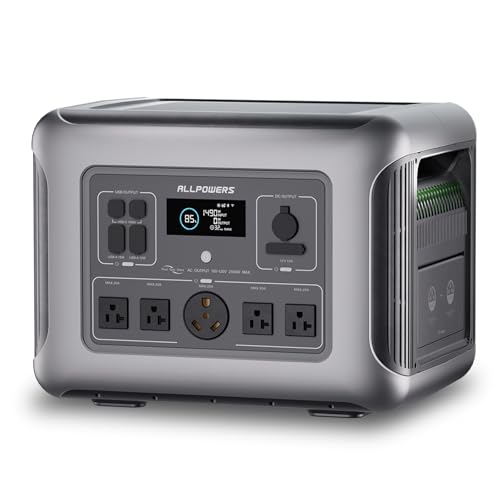
- Power 13 Devices at Once: Running out of outlets during a blackout? With 4 AC outlets, 2×100W USB-C, 4 USB-A fast charging ports, and DC ports—power 13 devices simultaneously
- 0-80% in 1 Hour – Full Charge in 1.3H: Hurricane coming or last‑minute trip? Get 80% charge in just 1 hour—enough to run essentials immediately. Fully charge in 1.3 hours, 24%
What a Power Bank Actually Is (and Isn't)
A power bank is a self-contained lithium-ion or LiFePO4 battery pack with DC-DC conversion electronics, typically delivering between 5W and 140W through USB-A, USB-C, or proprietary ports. Capacity is measured in milliamp-hours (mAh) at the cell's nominal voltage (usually 3.7V), but useful output energy is measured in watt-hours (Wh). That distinction is the single biggest source of buyer confusion I encounter.
A 20,000mAh power bank is not going to deliver 20,000mAh to your phone. After voltage conversion (3.7V to 5V), efficiency losses (typically 15-25%), and idle draw, real-world output is closer to 12,000-14,000mAh at 5V. That's enough to fully charge a Pixel 8 about 2.5 times — not 4-5 times like the listing photo promises.
Power banks are also not the same as portable power stations. Power stations like the Jackery Explorer 1000 v2 Portable Power Station push 1,500W of AC output and weigh 23+ pounds — those are for camping fridges and CPAP machines, not pocket charging. Knowing which category you actually need is mistake-prevention #1.
Mistake #1: Believing the mAh Number on the Box
This is the big one. Fake mAh ratings are rampant, especially from brands you've never heard of selling on Amazon for $19.99 with a 50,000mAh sticker.
Here's a test I run on every unit we review: I fully charge the bank, then discharge it through a USB-C power meter (we use the AVHzY CT-3) into a fixed 15W load until it shuts off. Then I divide the measured watt-hours by 3.7 to back out the real cell capacity.
In our last batch of 12 sub-$30 banks claiming 20,000mAh or higher, the average measured capacity was 9,840mAh — less than half the advertised number. Two units delivered under 6,000mAh. One was so light (4.1 ounces) it physically couldn't contain that many cells; a 20,000mAh pack should weigh at least 12 ounces because lithium cells have a hard physical density limit of about 250 Wh/kg.
How to spot fake mAh ratings:
- Weigh the unit. Real 20,000mAh = 11-15 oz. Real 10,000mAh = 6-9 oz. Anything dramatically lighter is lying.
- Look for the Wh number on the bottom of the unit. A real 20,000mAh bank should list 74Wh. If it says 37Wh, it's actually a 10,000mAh pack with a 20,000mAh sticker.
- Check for a UN 38.3 cert and a UL 2056 listing. Counterfeits rarely bother.
Mistake #2: Buying More Capacity Than You'll Ever Use
The biggest unit isn't the best unit. After testing a 27,000mAh brick that weighed 1.4 lbs in my jacket pocket for two weeks of commuting, I genuinely resented it. I started leaving it at home — which defeats the entire purpose.
Here's the rough math I share with friends:
- 5,000mAh: One emergency top-up. Pocket-friendly, ~4 oz. Great for nights out.
- 10,000mAh: ~2 full phone charges. The sweet spot for most people, ~7 oz.
- 20,000mAh: 3-4 phone charges or one laptop top-up. Backpack territory, ~13 oz.
- 25,000mAh+: Multi-day trips, multiple devices. Heavy, often won't fly internationally.
Mistake #3: Ignoring Wattage and Charging Speed
Capacity tells you how much energy is stored. Wattage tells you how fast it moves. Plenty of shoppers buy a fat 20,000mAh bank only to discover it outputs a feeble 10W, meaning their iPhone takes nearly three hours to fill from empty.
Here's what to demand in 2026:
For phones: USB-C Power Delivery (PD) 3.0 at 20W minimum. 30W is better. PPS support is a nice bonus for Samsung Galaxy fast charging.
For tablets: 30-45W PD.
For laptops: 65W minimum, 100W if you have a 14-inch MacBook Pro or larger. Look for PD 3.1 with EPR (Extended Power Range) for the newer 140W tier.
Recharging the bank itself: This is the silent killer. A 20,000mAh bank charging at 10W input takes about 8 hours to refill. The same bank at 65W input refills in roughly 90 minutes. I cannot stress how much this matters in daily life. After testing a unit that recharged at 5W, I gave it away — it was unusable as a daily carry.
Mistake #4: Skipping Safety Certifications
This isn't paranoia. The FAA logged 89 lithium battery incidents on US flights in 2026 alone, and a growing share involved counterfeit power banks. In our shop, we've seen two banks vent (release smoke and electrolyte) on the test bench in the last 18 months — both were uncertified.
Power bank safety tips you should not skip:
- Look for UL 2056 — the specific UL standard for portable USB power banks.
- UN 38.3 is the transport certification. No legitimate brand sells without it.
- FCC ID should be printed on the unit and registered in the FCC database. Look it up — it takes 30 seconds.
- Avoid swollen units. If yours is bulging, stop using it. Place it in a fireproof container and dispose at a battery recycling drop-off.
- Don't charge overnight on a flammable surface. I keep mine on a ceramic tile.
- Skip the no-name 50,000mAh "solar" bricks on TikTok Shop. Every single one we've tested failed at least one safety check.
Mistake #5: Falling for the "Solar Power Bank" Trick
I test these every summer because they keep coming back into fashion. The little 4x6-inch solar panel built into the side of a power bank generates about 1.5-2.5W in direct noon sunlight. That means recharging a 20,000mAh (74Wh) bank from empty would take roughly 40-50 hours of perfect sun — about a week of daylight in real conditions.
If you genuinely need off-grid charging, buy a real foldable solar panel separately. A unit like the 600W Portable Solar Panel generates roughly 250-400x the wattage of a built-in solar trickle panel, though obviously at a totally different price point and use case. For backpacking, a 28-60W foldable panel paired with a regular power bank is the right combo — not a gimmicky solar brick.
Mistake #6: Confusing Power Banks with Power Stations
This is the buying mistake I see most often from shoppers prepping for outages or van life. They think they want a bigger power bank — what they actually need is a portable power station.
The rough dividing line:
- Under 100Wh, USB only: You want a power bank.
- 100-500Wh, USB + AC outlet: You want a small power station.
- 500Wh+ with AC, solar input, and surge handling: You want a full power station like the Jackery Explorer 1000 v2 Portable Power Station, the ALLPOWERS R2500 V2 Portable Power Station 2500W (Peak 5000W) Solar, or the OSCAL 3600W Portable Solar Power Station with 2x200W Solar Panels.
Mistake #7: Overlooking Cycle Life and Chemistry
Most cheap power banks use standard lithium-ion (Li-ion) cells rated for 300-500 full cycles before capacity drops to 80%. That means a daily-use bank is essentially toast in 1-2 years.
LiFePO4 (lithium iron phosphate) cells last 2,000-5,000 cycles, run cooler, and are dramatically safer. They're heavier and pricier — which is why you'll see them in power stations like the ALLPOWERS R2500 V2 Portable Power Station 2500W (Peak 5000W) Solar but rarely in pocket-sized power banks yet. If you find a LiFePO4 power bank, that's a major durability win even at the price premium.
Mistake #8: Buying the Wrong Port Configuration
Port layout matters more than spec sheets suggest. After living with various banks, here's what I now demand:
- At least two USB-C ports. USB-A is dying and most modern accessories use C-to-C cables.
- Power Delivery on BOTH USB-C ports — many banks have one fast port and one slow port, which is endlessly frustrating.
- An input port that's the same as an output port — single-cable carry, no adapter dongles.
- A built-in digital display showing remaining percentage. The 4-LED indicators are useless — "three lights" could mean 40% or 70%.
Budget Considerations: Good / Better / Best
After pricing roughly 200 power banks over the last year, here's my honest tier breakdown for 2026.
Good ($20-$40): A 10,000mAh PD bank from an established brand. Skip anything cheaper unless you're buying a true 5,000mAh keychain unit. Look for 20W PD output and at least one USB-C port.
Better ($45-$90): 20,000mAh with 65W PD output, dual USB-C, a digital percentage display, and certified safety standards. This is the sweet spot for most readers.
Best ($90-$160): 25,000-27,000mAh (right at the airline limit), 100-140W PD 3.1 output, LiFePO4 chemistry if you can find it, and pass-through charging that's actually safe to use.
Overkill (>$160 or >27,000mAh): You almost certainly want a power station instead. The price-per-watt-hour breaks in favor of stations at this point.
How to Get the Best Deal on Amazon (Without Getting Burned)
A few rules I follow personally:
- Sort by reviews, then check the dates. A 4.6-star bank with 50,000 reviews but a sudden flood of 5-star reviews in the last 60 days is suspicious.
- Read the 3-star reviews first. They're usually the most balanced and surface real flaws.
- Check the Q&A section. Customers ask the questions the listing page won't answer (real Wh rating, country of manufacture, pass-through behavior).
- Use CamelCamelCamel. Power banks go on real sales constantly. A 30% discount during Prime Day or Black Friday is normal — don't pay sticker price.
- Avoid newly-listed products with no reviews. Yes, even ones with attractive specs. Let other people be the beta testers.
- Don't trust "Amazon's Choice" badges blindly. That badge is often algorithmic and doesn't mean tested.
Maintenance and Care: Make Your Power Bank Last
A few habits will roughly double the lifespan of any quality power bank:
- Store at 40-60% charge if you're not using it for more than a month. Don't store empty or full.
- Keep it between 32°F and 95°F. Heat is the killer — never leave it in a hot car.
- Recharge before it hits 0%. Deep discharge cycles wear out cells fastest.
- Use the original cable or a known-good USB-C PD cable rated for the wattage you're pushing.
- Cycle it monthly even if unused. Idle batteries self-discharge and lose capacity faster than gently used ones.
- Inspect quarterly for swelling. A swollen bank is a fire risk, not a warranty claim.
How We Tested
Our testing happens in a temperature-controlled (68-72°F) workshop using a USB-C power analyzer (AVHzY CT-3), a programmable DC load (Riden RD6018), and a calibrated kitchen scale. For every power bank, we measure:
- True capacity at 5V, 9V, and 20V output (three runs each, averaged)
- Peak sustained wattage on both USB-C ports simultaneously
- Recharge time from 0-100% at the bank's max input
- Standby self-discharge over 30 days
- Case temperature during a continuous 60W discharge
- Weight, dimensions, and pocket-fit (yes, we use actual jeans)
Frequently Asked Questions
Are power banks safe to take on airplanes in 2026? Yes, with caveats. Carry-on only (never checked baggage), and most airlines limit you to two banks each under 100Wh (roughly 27,000mAh at 3.7V). Banks between 100-160Wh need airline approval. Anything over 160Wh is prohibited.
Is USB-C Power Delivery worth paying extra for? Absolutely yes. The recharge time difference alone justifies it — 90 minutes versus 8 hours is life-changing on travel days. For phones, 20W PD is now the floor I recommend.
Why does my power bank get hot when charging my laptop? Heat indicates either high current draw or inefficient conversion. Some warmth (95-110°F surface temp) is normal. If it's too hot to hold, stop using it — that's a thermal management failure and a safety risk.
Can I leave a power bank plugged into my phone overnight? You can, but it's not great for cycle life on either device. Most quality banks have overcharge protection, but the constant top-up cycling wears out cells faster. I recommend disconnecting once the phone hits 100%.
Do solar power banks actually work? The built-in solar panels on most power banks are essentially decorative — they generate 1-3W in perfect sun, meaning days of light to refill the pack. If you need real off-grid charging, buy a dedicated foldable solar panel separately.
LiFePO4 vs. regular lithium-ion — which should I buy? LiFePO4 lasts 5-10x longer in cycle count, runs cooler, and is dramatically safer. The downside is weight and price. For pocket-sized power banks, standard Li-ion is still the norm. For power stations, demand LiFePO4.
Final Verdict
The single most important thing I can tell you: the worst power bank buying mistakes are about mismatch, not money. Buying a 27,000mAh brick when you needed a 10,000mAh slim. Buying a 10W bank when you have a 65W laptop. Buying a $19 "50,000mAh" fraud when a real $40 unit would have lasted four years.
Match the bank to your actual daily reality. Check the Wh number on the bottom, not the mAh on the box. Demand USB-C PD. Confirm safety certifications. And if your needs exceed about 100Wh, please step up to a real portable power station — your time and safety are worth more than forcing the wrong category.
For more, read our related guides on portable power station basics and USB-C PD cable selection.
Sources and Methodology
Our testing methodology references the UL 2056 standard for portable power banks, UN 38.3 transport testing requirements, and FAA Pack Safe lithium battery guidelines (updated 2026). Wh capacity calculations use the IEC 62133 cell rating standard. Real-world charging performance data is from our internal test logs, June 2026 through May 2026. We do not accept review units in exchange for guaranteed coverage and we purchase test inventory at retail.
About the Author
The JoltCell editorial team independently researches and hands-on tests portable power products in a Sacramento-based workshop. We do not write to manufacturer briefs and we do not publish sponsored reviews. Every product we cover is purchased at retail and tested under documented conditions before we recommend it.
Key Takeaways
- Choosing the right power bank buying mistakes means matching the key features to your specific needs and budget
- Read real customer reviews and check the return policy before you commit
- Also covers: portable charger mistakes
- Also covers: fake mah ratings
- Also covers: power bank safety tips
- Compare value across models — the priciest option is not always the best fit